
Ever felt your stomach churn when revenue dips unexpectedly, or the economy takes an unwelcome turn?
The good news? We’ve all been there, friend.
The great news? You don’t have to stay stuck in that panic mode. 🙌🏼
In the next five minutes, you’ll learn the simple Trend‑Tracking Forecast we use to spot cash‑flow cliffs long before they appear.
One spreadsheet. One afternoon.
Pop your details below to grab your copy of an editable Revenue Trend Tracking Template.




Predictable profit. Let’s dive in.
So, here’s the thing …
The capacity to forecast revenue effectively is a fundamental skill for entrepreneurs and freelancers.
Revenue forecasting creates confidence in your business. You don’t start to hit the “worry” button when one month or even a quarter doesn’t go according to plan.
BUT this is easier said than done, and I’ll share my go-to technique in just a bit, but first …





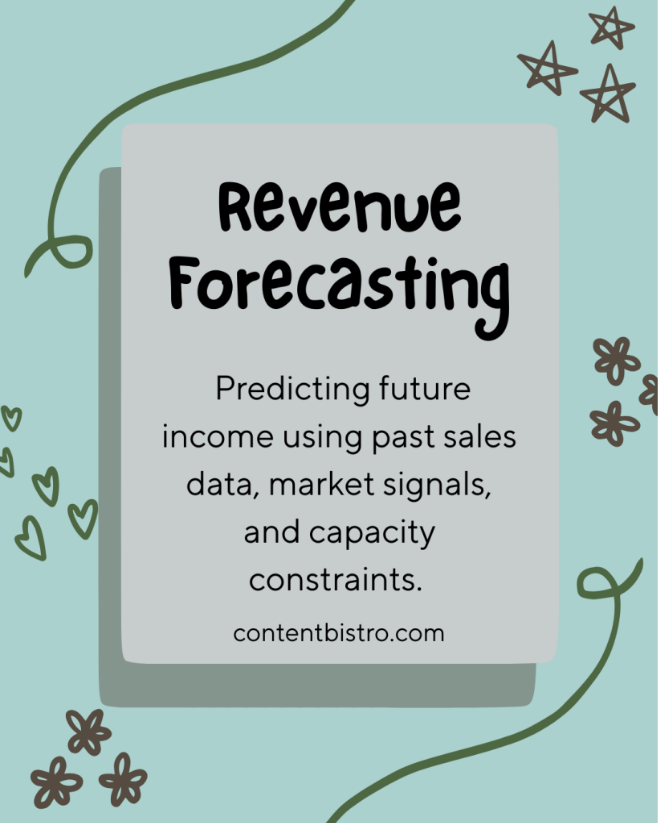
Revenue forecasting is the art and science of predicting future income using past sales data, market signals, and capacity constraints.
But let’s get clear … it’s much more than just making an educated guess.
Effective revenue forecasting gives your business resilience, allowing you to confidently navigate downturns without spiraling into worry mode.
Why it matters: When you can see next quarter’s cash position, you stop reacting and start steering — pricing, promos, hiring, even vacations — weeks ahead of schedule.
Picture this: when a recession hits, central banks don’t just cross their fingers and hope for the best.
They proactively stimulate growth — cutting interest rates, infusing capital, and strategically adjusting policies.
Entrepreneurs must adopt a similar proactive stance.
When revenue slows down, instead of panicking or making rash decisions, your business needs a calculated, strategic response:
Cutting costs.
Automating operations.
Branching into more profitable niches.
And building out our skills to extend our offers.
We take a holistic approach to prevent our business from slowing down.
On the flip side … what we can’t afford to be is inflexible. ❌
We can’t afford to make knee-jerk reactions.
Cut costs without evaluating ROI.
Putting a stop to skill-building.
Offering discounts.
Remember, raising your prices isn’t the only route to higher profits.
Sometimes, strategic cost-cutting or outsourcing can boost that bottom line.
Taking the scale-back-on-all-spends approach might seem like a good plan during lean periods.
BUT all it does is create a recurring cycle of lean periods.
You need to be the catalyst.
You need to turn things around.
You need to be proactive about your profitability.
AND that is where revenue projection comes into play. Because it helps you to act with agility and initiative.
Your business can’t afford to wait passively for the tide to turn.
You need a strategic roadmap. And that’s precisely where revenue forecasting shines.
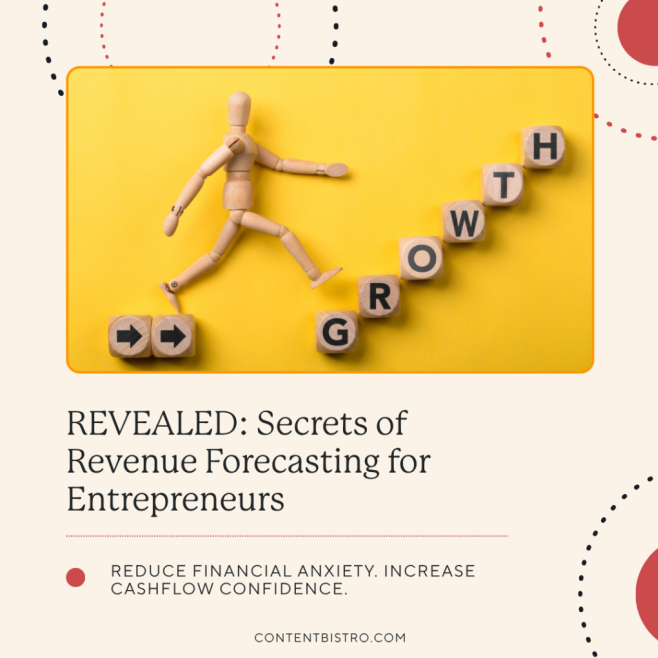
As an entrepreneur, your business conditions are often unpredictable, but that doesn’t mean your revenue forecasting needs to be guesswork.
Enter trend analysis — an entrepreneur-friendly way to forecast revenue effectively. Trend analysis relies on historical sales, expense data, and operational capacity to predict future revenue accurately.
At Content Bistro, we’ve used trend analysis for over 5 years (as of writing this post), giving us confidence even during downturns.
Here’s our exact step-by-step process:
Start by identifying your best-performing periods and the conditions behind that success.
Example: Our first $50K month involved just two major projects, ten consulting engagements, and recurring course revenue. This clear snapshot provided us with a repeatable template.
Your action step: Find patterns in your successful months and outline the conditions clearly.
Break down your revenue sources to pinpoint the biggest contributors.
Example: In our $50K month scenario, course payments accounted for 50%, consulting contributed 20%, and client projects made up 30%.
Knowing these numbers enabled strategic decisions to maximize profits without burnout.
Your action step: Determine what contributes most profitably, not just the most revenue.
Every product or service has a lifecycle, with clear peaks and valleys in revenue generation.
Example: In early 2023, we paused enrollments in our “Ready to Sell” course for revamping, anticipating a slow quarter. But we strategically offset this with a relaunch in Q2, balancing our revenue proactively.
Your action step: Plan product updates and launches according to lifecycle stages to minimize revenue disruption.
Consistent demand generation is crucial to reliable revenue forecasting. Yep, always be marketing.
Consider what’s fueling your sales: marketing efforts, referrals, new product excitement, or ongoing client engagements.
Your action step: Double down on consistent demand-generating activities like targeted marketing and intentional visibility.
External factors can significantly impact your forecast accuracy.
Example: If your clientele is primarily in the SaaS startup market, a downturn in venture funding will inevitably affect your revenue.
Your action step: Regularly analyze external market trends and factor them into your revenue predictions to avoid reactive decisions.
To help you get started right away, I’ve created a quick-start revenue forecasting template.
This easy-to-use spreadsheet comes with simple built-in instructions and a walkthrough video. This ready-to-calculate template includes:

Simple built-in instructions
Download your free template here and start forecasting confidently today
With a refined trend analysis and revenue projection process, you’ll stay ahead of the curve and improve your business’s long-term health.
Want help creating your personalized revenue roadmap with clarity and confidence?
That’s precisely what we offer through our Intentionally Profitable 2:1 strategic consulting experience.
Reach out, and let’s set you up for success without panic mode ever hitting again.